Amazon2027 · dates coming soonXingu & Araguaia · Mato Grosso & Pará

Indigenous Brazil: the Xingu and the Araguaia

Long days of road and river to reach Indigenous communities of the Xingu and the Araguaia, and three days and two nights as guests of each of them.

Price on request

  • 10 – 12 days
  • Transport, lodging, all meals and a bilingual expedition team from Cuiabá included

Photos courtesy of the operator, taken on its expeditions with the communities.

Season
Late May – October
Length
10 – 12 days
Pace
Moderate · long road days
Guides
Bilingual guide and expedition team
Group size
Up to 10 travelers
Starts & ends
Cuiabá (CGB)
2027 season

Price on request

Request 2027 dates Ask on WhatsApp Not ready yet? Get the trip notes (PDF) →
  • A deposit holds your dates
  • Full refund within 7 days of paying the deposit
  • Reply within 24 hours, proposal within 72
  • Registered travel agency in Brazil, secure card payment by Stripe
  • Support by WhatsApp during your trip
Price
2027 dates and prices are being confirmed with the operator.
Overview

About this expedition

In the Xingu basin and along the Araguaia, Indigenous peoples keep their languages, ceremonies and ways of living with the forest, and some of their communities choose to host visitors for a few days each season. This is not a tour of villages but a stay as guests, on the community's terms: you share the days as they come, and the community decides what to show you.

2027 season

Price on request

Request 2027 dates Ask on WhatsApp Not ready yet? Get the trip notes (PDF) →
  • A deposit holds your dates
  • Full refund within 7 days of paying the deposit
  • Reply within 24 hours, proposal within 72
  • Registered travel agency in Brazil, secure card payment by Stripe
  • Support by WhatsApp during your trip
Price
2027 dates and prices are being confirmed with the operator.

Why go

  • Three days and two nights as guests of each of two Indigenous communities
  • Daily life, body painting, crafts and, when you're invited, ceremonies and dances
  • Evening conversations with elders and leaders, translated by your guide
  • Groups of up to 10 travelers; private departures possible
  • An operator team with decades of experience in these territories
  • Everything arranged from Cuiabá: road transport, lodging and meals
Day by day

Itinerary

Day 1Cuiabá
Arrive in Cuiabá and rest. The expedition team meets you and briefs the group.
Day 2On the road
A full day's drive north, through farmland and into the forest, to the edge of the first territory.
Days 3 – 5First community
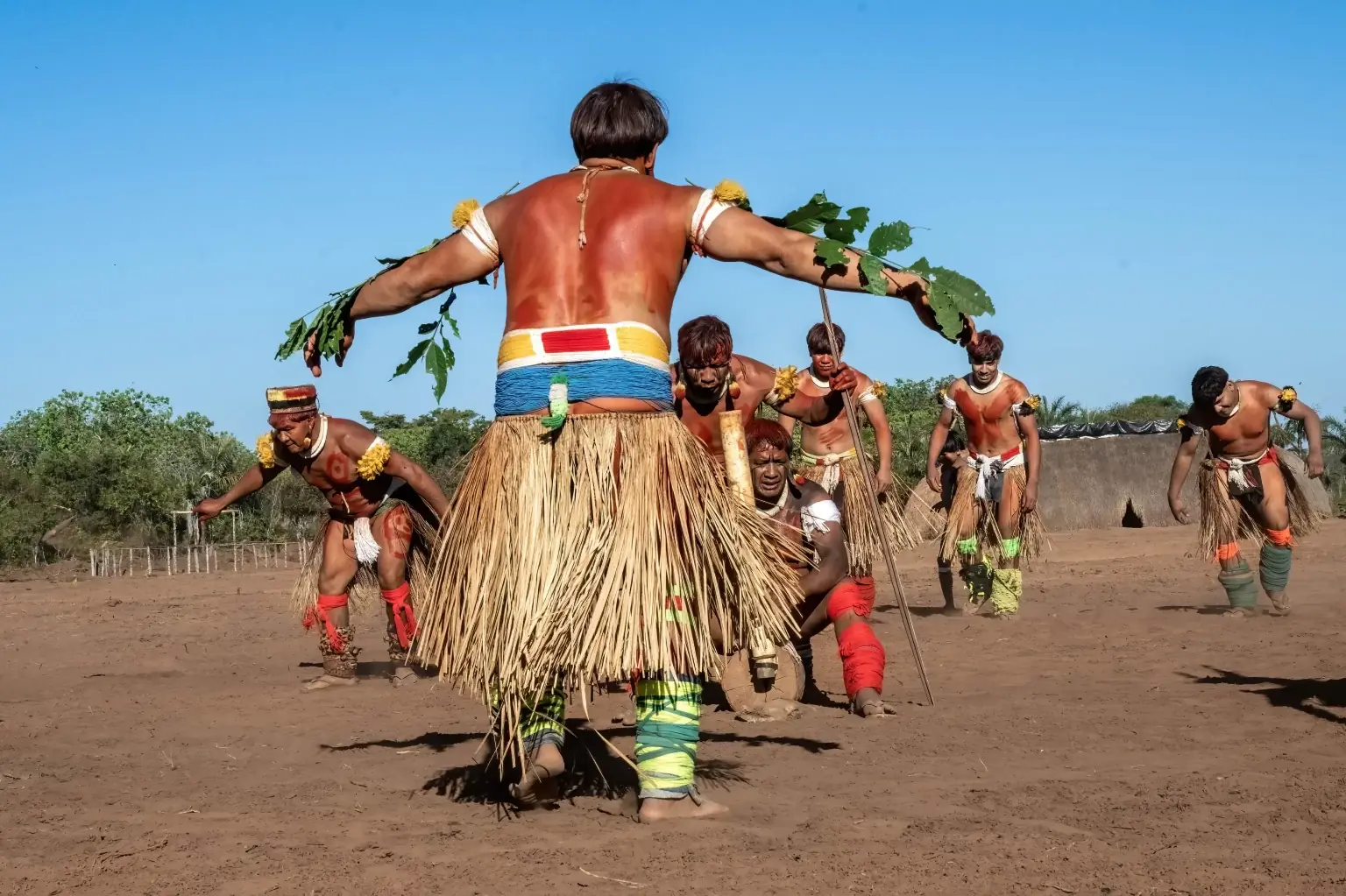
Three days and two nights as guests of the community: meals, daily life, crafts and, if the community invites the group, dances and ceremonies.
A dancer in a palm-fiber skirt, arms outstretched
As guests of the community
Day 6Between villages
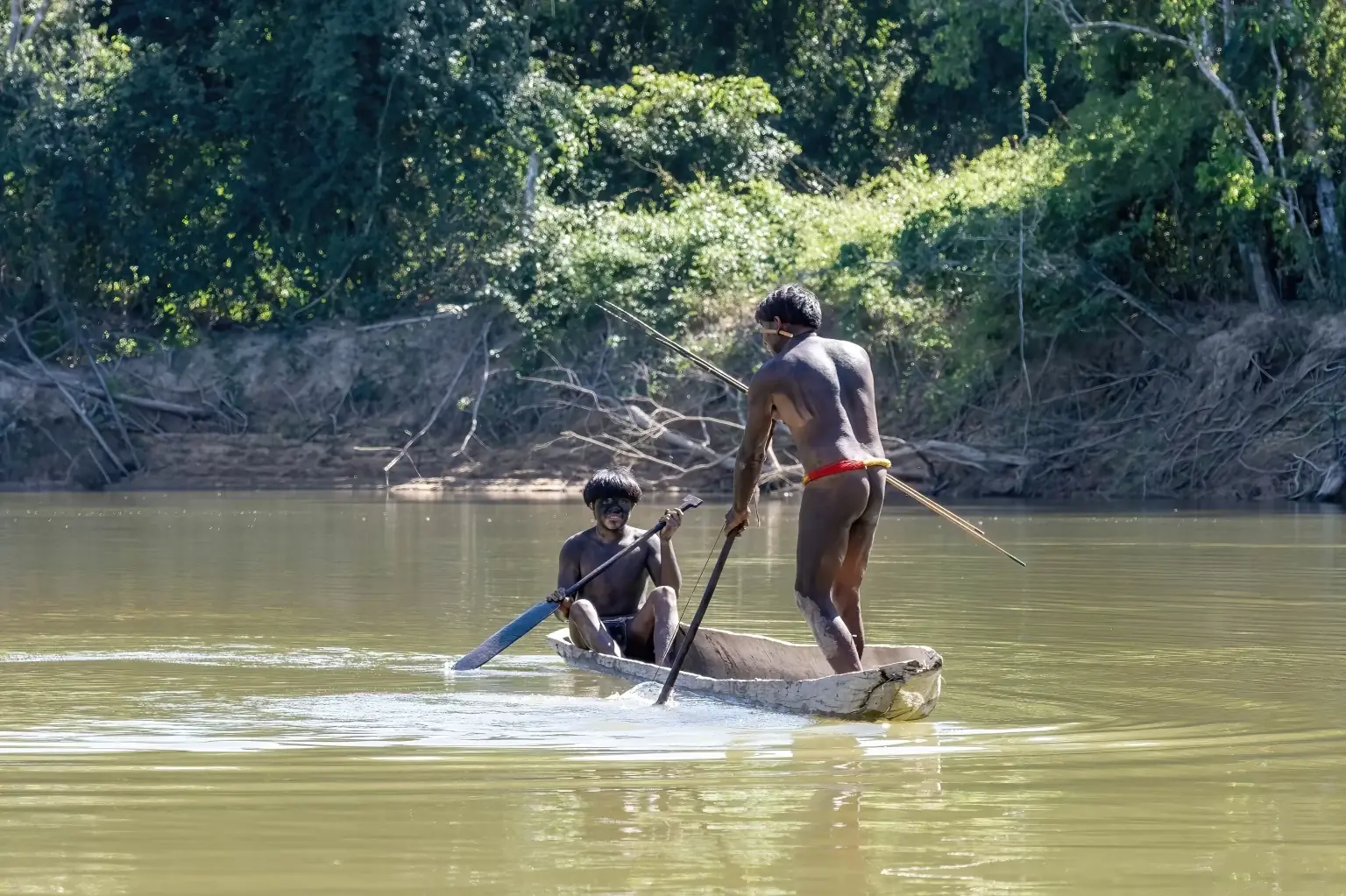
About a day of travel, by road and sometimes by boat, to the second community.
Two men fishing from a canoe on the river
Between villages, by road and river
Days 7 – 9Second community
Another three days and two nights, with a different people, language and way of life.
Days 10 – 11Back to Cuiabá
The long road back to Cuiabá, and your onward flight. The exact length of the trip depends on the route of each departure.

How the days usually run. Your final itinerary comes with your proposal, confirmed with the operator for your dates.

The details

What's included

Included

  • TransportBy road from and back to Cuiabá, and by boat where needed
  • LodgingThroughout, from your arrival in Cuiabá
  • All mealsFrom your arrival in Cuiabá
  • Expedition teamA bilingual guide and the operator's team

Not included

  • Flights to and from Cuiabá
  • Drinks and personal extras
  • Travel insurance (required)
  • Tips and crafts you buy

Typical inclusions. The exact list for your dates comes in your proposal.

Where you'll stay

Towns along the way

Road days
  • Simple hotels

In the villages

As guests of the community
  • Very simple lodging arranged by the operator
  • You share the community's meals
  • Basic facilities and cold water
  • Little or no phone signal

The exact arrangements depend on each community and are described in your proposal.

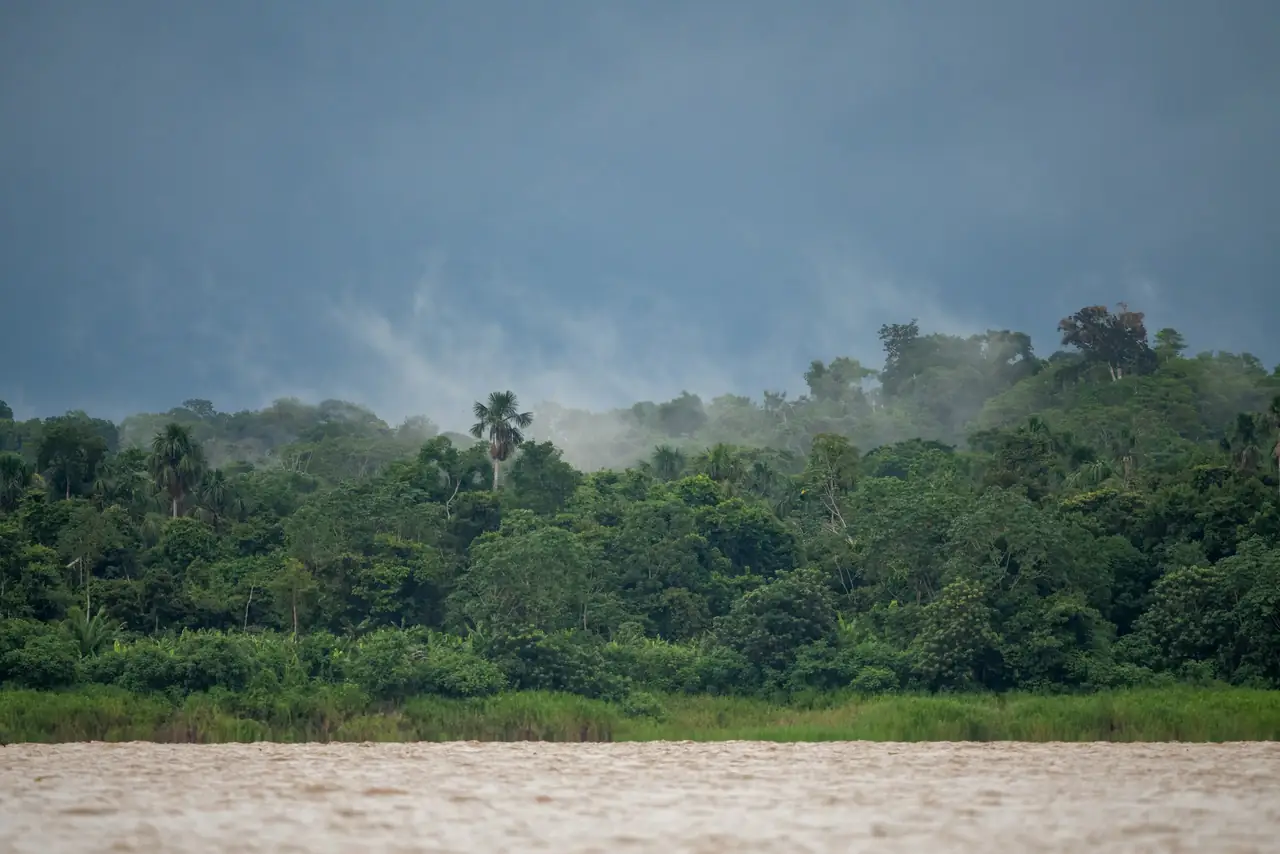
Misty rainforest canopy seen from the Amazon river
The region

The Xingu and the Araguaia

The Xingu is one of the great southern tributaries of the Amazon, a clear-water river that runs north for more than 1,800 km (1,100 mi) through Mato Grosso and Pará. Along its upper reaches lies the Xingu Indigenous Territory, created in 1961 as Brazil's first large Indigenous territory; further north lie the Kayapó lands, more than 10 million hectares of continuous forest.

Where it is

Getting there

AmazonXinguAraguaiaTapajósXINGU ANDARAGUAIA REGIONMATO GROSSOPARÁCuiabáStart and end (CGB)200 km
  1. Start in Cuiabá (CGB)Day 1 is an arrival day, so you can land at any time
  2. About a full day by roadBy van or 4x4, and by boat where needed
  3. Two host communitiesNamed in your proposal for your dates

Approximate locations. Map data: Natural Earth.

About the region

People

Communities visited may include the Kayapó, the Karajá of Bananal Island and peoples of the Xingu Indigenous Territory, depending on each season's route and on which communities are receiving visitors.

Landscape

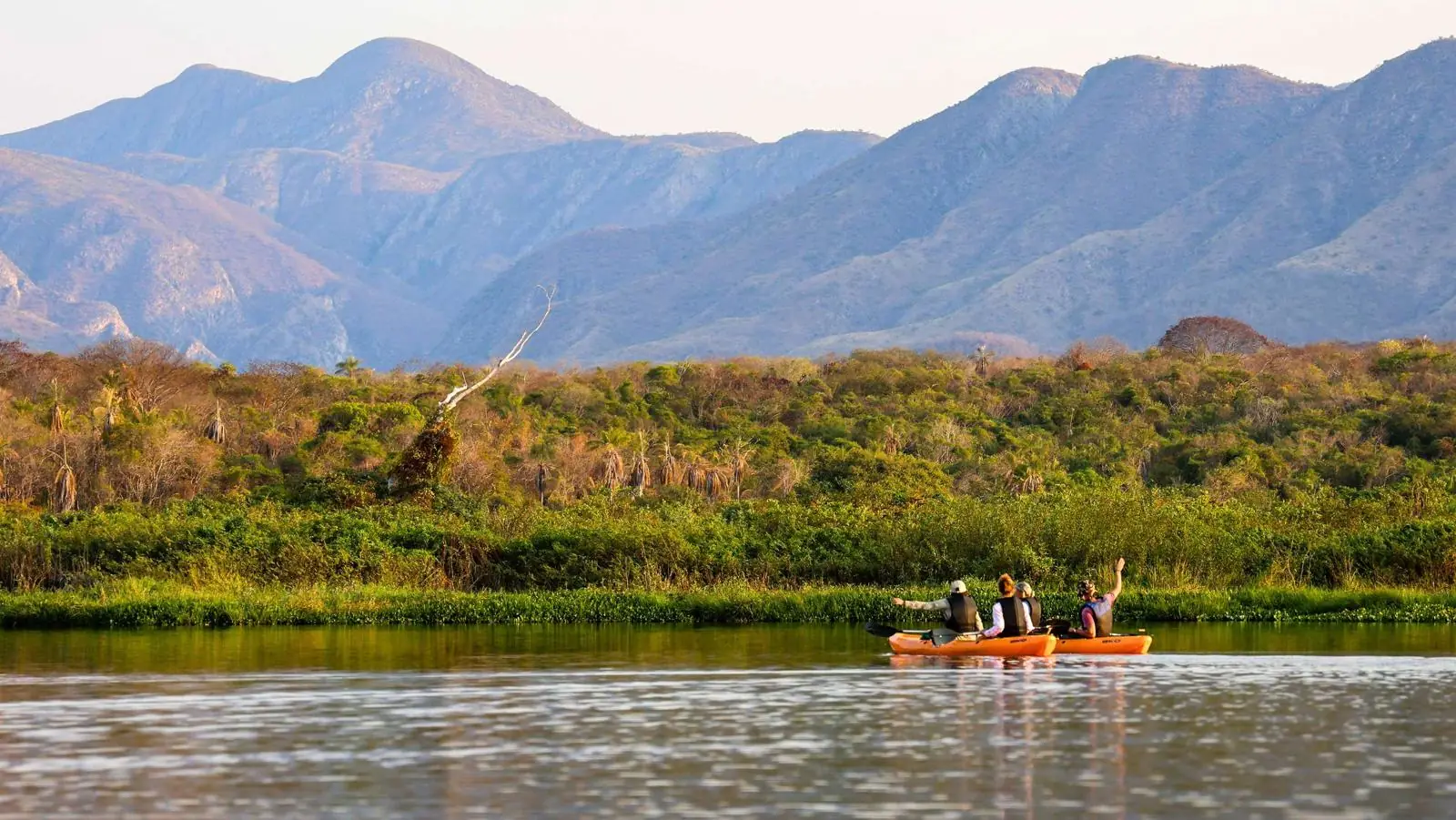
Tall forest, rivers with rapids and wide sandy beaches in the dry season, and open savanna in between. Long stretches of dirt road connect it all.

Climate

Hot year-round, 25 to 35 °C (77 to 95 °F). Dry season roughly May to October, when roads are open and rivers drop. Nights can be cool in July.

Protection

Indigenous territories are protected by Brazilian law and can only be visited with the community's consent. The communities decide who comes, when, and on what terms.

Is this trip for you?

Before you book

A good fit if…

  • You're fine with long days on the road, much of it on dirt roads
  • You're comfortable with very simple lodging and basic facilities in the villages
  • You're open to eating what your hosts eat
  • You're ready to follow each community's rules on photos, clothing and behavior
  • You come to listen and learn, not to see a show

Not sure? Tell us about your group and we'll be straight with you.

Good to know

Season

Late May to October, the dry season. From November the rains make the dirt roads impassable.

Health and insurance

Yellow fever vaccination is recommended for Mato Grosso and Pará, and proof may be requested. Parts of the region have malaria risk, so ask a travel clinic 6 to 8 weeks before you go about prevention, plus hepatitis A and typhoid. Travel insurance with medical cover and emergency evacuation is required.

Respect

Photography, clothing and visits follow each community's rules, explained before you arrive and on arrival.

Booking and cancellation

A deposit holds your dates; the balance is due before departure. Full refund if you change your mind within 7 days of paying the deposit. After that, the operator's cancellation policy applies; you receive it in writing with your proposal. Booking terms

FAQ

Questions

Which communities will we visit?
It depends on each season's route and on which communities are receiving visitors. Your proposal names the communities planned for your departure.
Will we see ceremonies?
Often, yes: welcome dances, body painting and evening conversations are common. But ceremonies follow each community's own calendar, and nothing is put on for visitors, so specific rituals can't be promised.
How big is the group?
Up to 10 travelers. Private departures for your own group are possible; tell us in your request.
Who translates?
A bilingual guide translates throughout. The operator's guides speak English and Spanish.
Is it risky to be this close to wild animals?
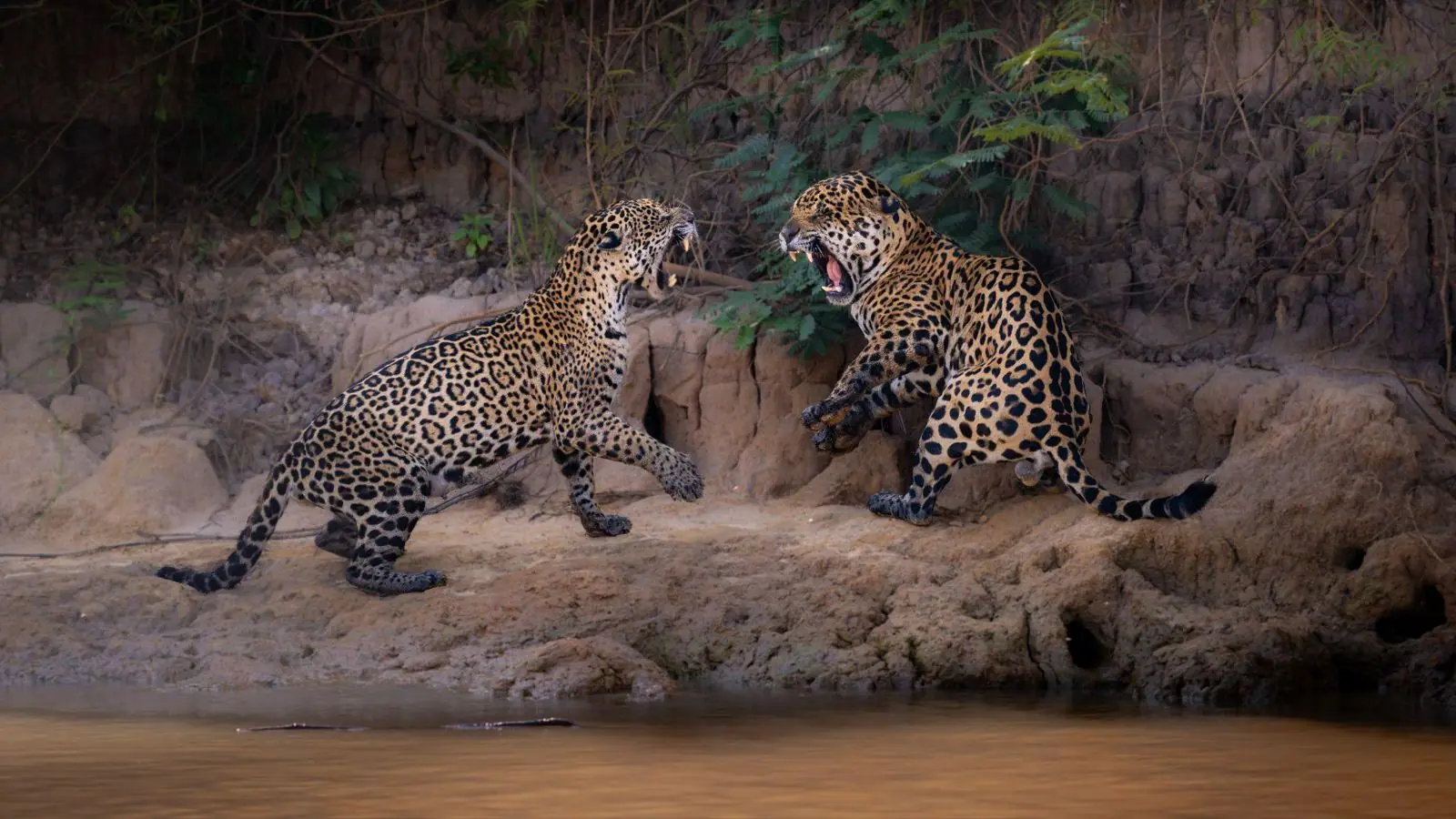
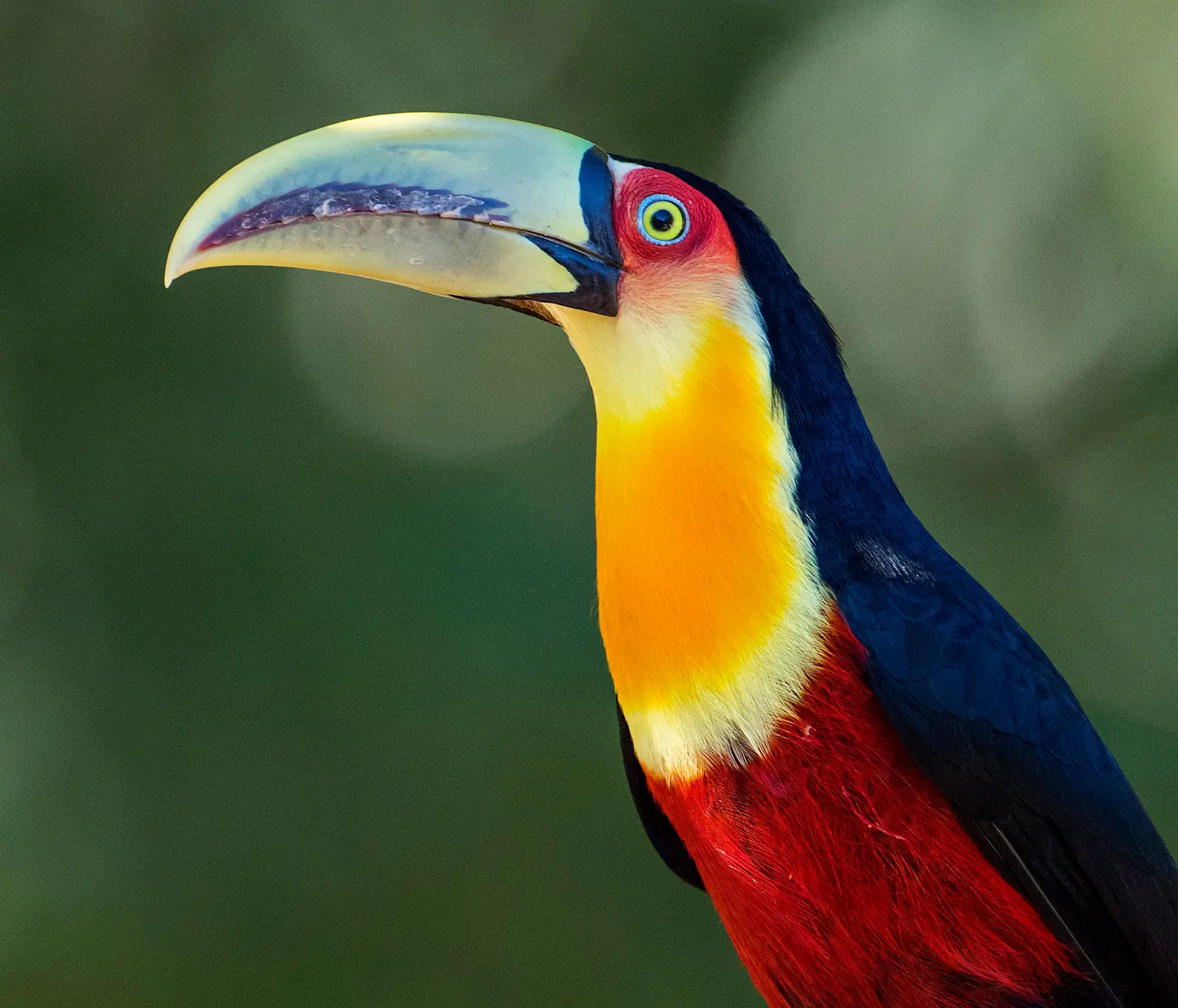
Wildlife isn't the focus of this expedition, but you are in forest and river country, with snakes, insects and, in some rivers, stingrays. Your hosts and the expedition team know where it is fine to walk and swim: follow them, wear closed shoes on trails, use a headlamp after dark and ask before getting into the water.
How fit do I need to be?
Moderately. The hardest parts are the long road days, the heat, and sitting on the floor or on simple benches in the villages.

Practical details (rooms, food, Wi-Fi, money, what to pack) come with your proposal and in the trip notes.

Practical notes

Can children come?

It depends on the communities and the route, and some activities are meant for specific ages, under the operator's rules. Tell us the children's ages in your request and we'll check with the operator.

Can I travel on my own?

Yes. Solo travelers join the group departure. Tell us in your request.

How do we travel?

By van or 4x4 from Cuiabá, and by boat where needed. Reaching the first community takes about a full day, and moving between communities takes about another day.

How do I get to Cuiabá?

There are direct flights from São Paulo and Brasília, which connect with international flights from the US and the UK.

Where do we sleep?

In very simple lodging inside or next to the village, arranged by the operator with the community. Expect basic bathrooms and cold water. Your proposal describes the arrangements for each stop.

What do we eat?

Mostly what your hosts eat, with support from the expedition team. Tell us about any dietary needs in advance, so we can check what's possible.

Can I take photos?

Usually yes, but always with permission, and some moments are off-limits. Your guide explains each community's rules before you arrive.

Should I bring gifts?

Ask us first. The operator advises what is appropriate for each community. Buying crafts directly from the artisans is always welcome.

Is there phone signal or Wi-Fi?

Not in the villages. Plan to be offline for several days at a time.

What's the weather like?

Hot and dry, with strong sun at midday and nights that can be cool in July. Dust on the roads is part of the trip.

Do I need travel insurance?

Yes, it's required, with medical cover and emergency evacuation. We also recommend trip cancellation cover. Brazilian accident cover for the activities, issued by MBM Seguradora S.A., is included at no extra cost; you can decline it. The villages are many hours from the nearest hospital.

What about money?

Bring Brazilian reais in cash for crafts, drinks in town and tips. There are no card machines in the villages.

What about power?

Power is limited or absent in the villages. Bring a power bank and charge when you're in town. Brazil uses type N sockets, which also take type C plugs.

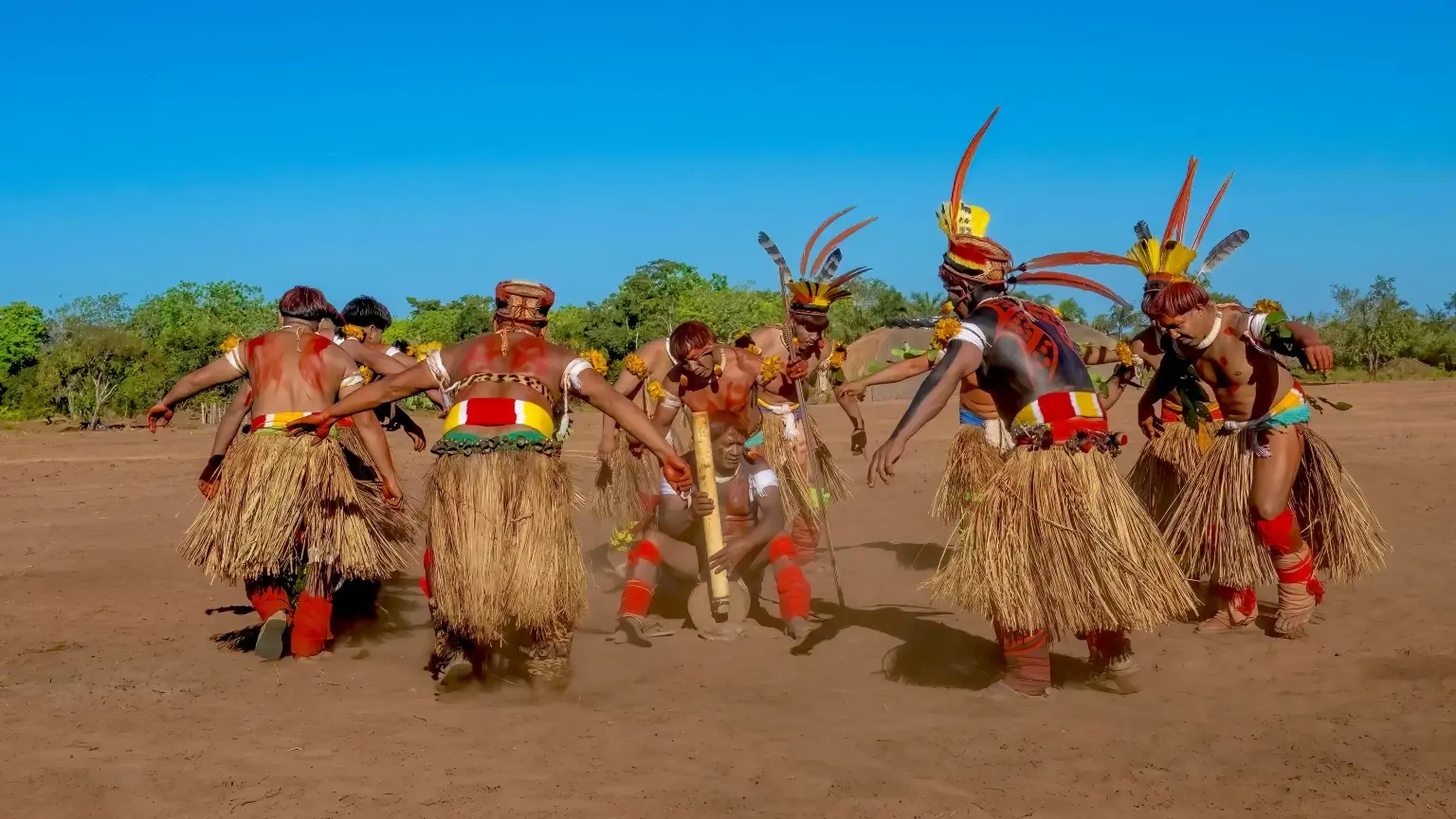
A dance in the village plaza
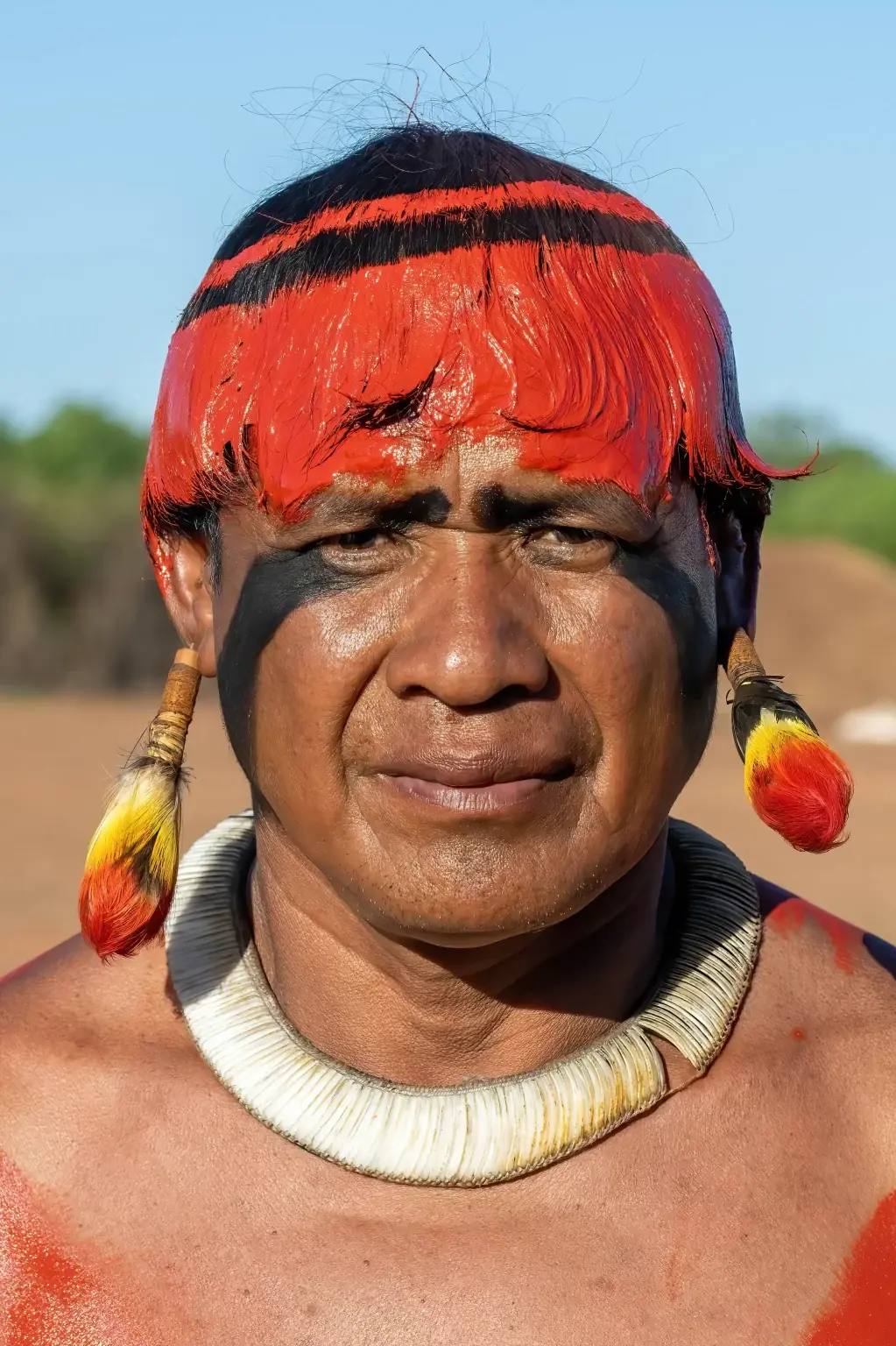
A man with a red headband, ear ornaments and a white shell necklace
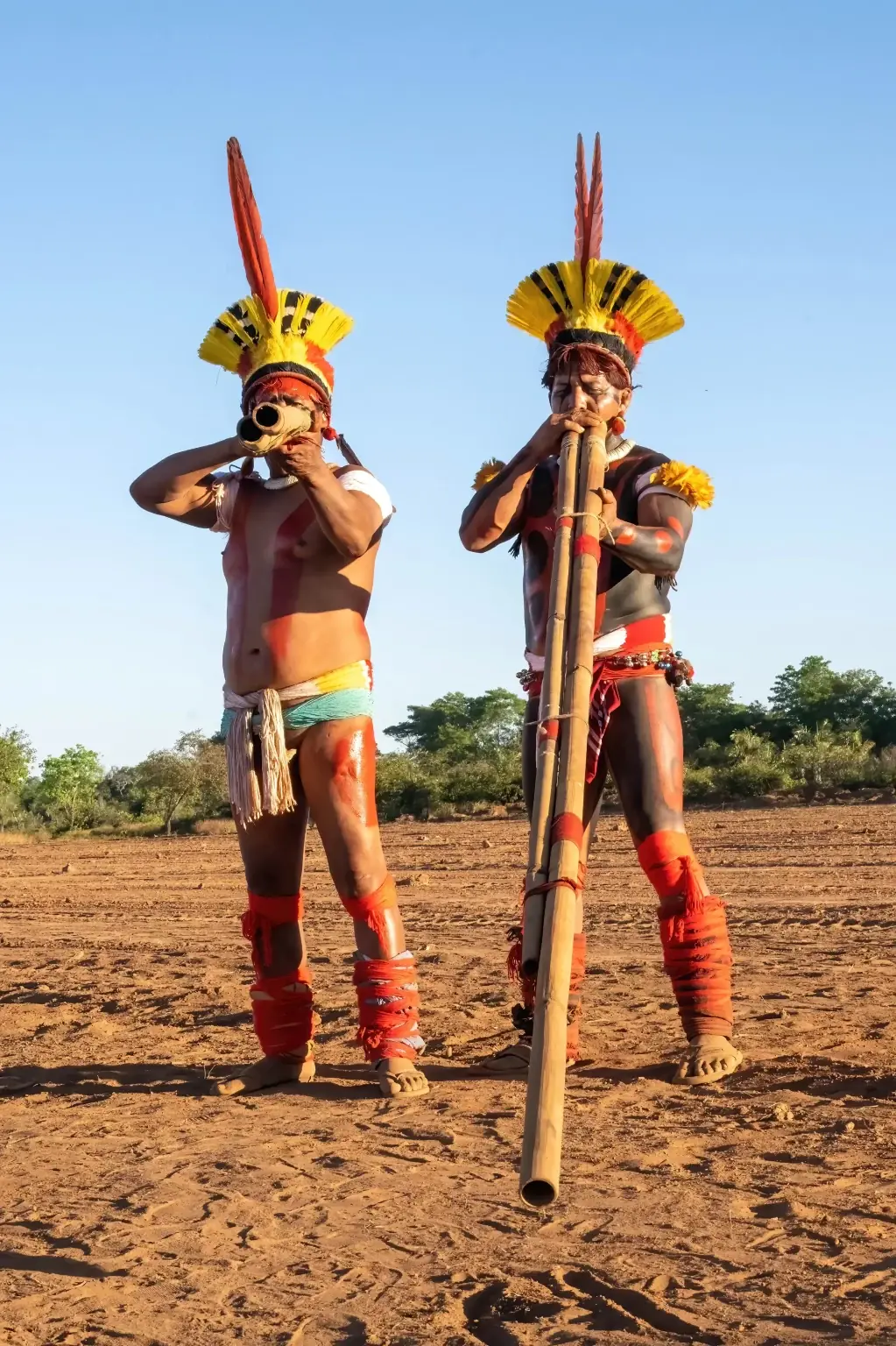
Two men in feather headdresses playing long flutes
A smiling face painted with black genipap dye
Two men in red body paint in the village
A line of painted men dancing across the village plaza
A dancer in a palm-fiber skirt, arms outstretched
Two men fishing from a canoe on the river
Misty rainforest canopy seen from the Amazon river
Price on request · 2027Request dates
Request 2027 dates

Indigenous Brazil: the Xingu and the Araguaia

Tell us when you'd like to travel. We reply within 24 hours.

Message us on WhatsApp

Not ready to ask yet? Get the trip notes: this expedition in one PDF, to read offline or share. The download opens right away.

We use your email only to follow up about this trip. Privacy policy.

We only use your details to reply to you. Privacy policy